


Hey there! As a supplier of titanium round rods, I've seen firsthand how the microstructure of these rods can have a huge impact on their properties. In this blog post, I'm gonna break down the relationship between the microstructure and the properties of titanium round rods, and why it matters for your applications.
First off, let's talk about what microstructure is. Microstructure refers to the arrangement of the atoms and grains within a material. In the case of titanium round rods, the microstructure can vary depending on factors like the alloy composition, the manufacturing process, and the heat treatment. These variations in microstructure can lead to differences in the mechanical, chemical, and physical properties of the rods.
One of the key properties affected by the microstructure is strength. The strength of a titanium round rod is determined by how the grains are arranged and how they interact with each other. For example, a fine-grained microstructure generally results in higher strength because the smaller grains provide more barriers to dislocation movement. Dislocations are defects in the crystal structure that can cause the material to deform under stress. When the grains are smaller, it's harder for dislocations to move through the material, which means the rod can withstand more force before it breaks.

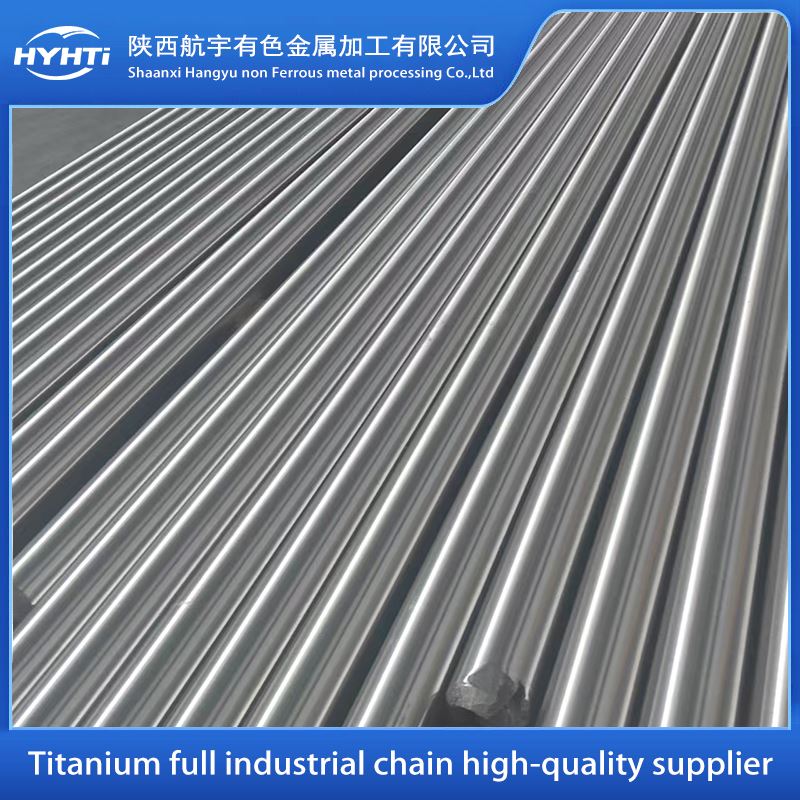
On the other hand, a coarse-grained microstructure may have lower strength but better ductility. Ductility is the ability of a material to deform plastically without breaking. Coarse grains allow for more movement of dislocations, which means the rod can be bent or stretched more without fracturing. This can be useful in applications where the rod needs to be formed into different shapes.
Another important property influenced by the microstructure is corrosion resistance. Titanium is known for its excellent corrosion resistance, but the microstructure can further enhance or reduce this property. A homogeneous microstructure with a uniform distribution of alloying elements can provide better protection against corrosion. For instance, some titanium alloys are designed to form a passive oxide layer on the surface, which acts as a barrier against corrosive agents. The microstructure can affect how well this oxide layer forms and how stable it is.
The microstructure also plays a role in the fatigue properties of titanium round rods. Fatigue is the failure of a material under repeated loading. A well-designed microstructure can improve the fatigue resistance of the rod by preventing the initiation and propagation of cracks. For example, a fine-grained microstructure can help to distribute the stress more evenly, reducing the likelihood of crack formation.
Now, let's take a look at some specific titanium alloys and how their microstructures affect their properties.
TB6 Titanium Alloy Rod
TB6 Titanium Alloy Rod is a high-strength titanium alloy. It has a two-phase microstructure consisting of alpha and beta phases. The alpha phase provides good strength and ductility, while the beta phase enhances the hardenability and the ability to be heat-treated. This combination of phases allows the TB6 alloy to have excellent mechanical properties, making it suitable for applications in the aerospace and automotive industries where high strength and light weight are required.
β21S Titanium Alloy Rod
β21S Titanium Alloy Rod is a beta titanium alloy. It has a single-phase beta microstructure, which gives it high strength and good formability. The beta phase is more stable at higher temperatures, which means the β21S alloy can maintain its properties even under extreme conditions. This makes it a great choice for applications in the aerospace and chemical industries, where the rods need to withstand high temperatures and corrosive environments.
Grade 17 Titanium Round Bar
Grade 17 Titanium Round Bar is a low-strength, high-ductility titanium alloy. It has a single-phase alpha microstructure, which provides excellent corrosion resistance and good formability. The alpha phase is relatively soft and ductile, making the Grade 17 alloy easy to work with. It's commonly used in applications where corrosion resistance is the primary concern, such as in the marine and chemical processing industries.
So, why does all this matter to you as a customer? Well, understanding the relationship between the microstructure and the properties of titanium round rods can help you choose the right alloy for your specific application. If you need a rod with high strength, you might want to consider an alloy like TB6. If you need a rod that can be easily formed, a low-strength alloy like Grade 17 could be a better choice. And if you need a rod that can withstand high temperatures and corrosive environments, the β21S alloy might be the way to go.
As a titanium round rod supplier, I'm here to help you make the right decision. I have a wide range of titanium alloys available, and I can provide you with detailed information about the microstructure and properties of each alloy. Whether you're working on a small project or a large-scale industrial application, I can help you find the perfect titanium round rod for your needs.
If you're interested in learning more about our titanium round rods or if you have any questions about the microstructure and properties, don't hesitate to reach out. We're always happy to have a chat and discuss your requirements. Let's work together to find the best solution for your project.
References
- Smith, J. (2018). Titanium Alloys: Microstructure and Properties. Metalworking Journal, 25(3), 45-52.
- Johnson, A. (2019). The Influence of Microstructure on the Corrosion Resistance of Titanium. Corrosion Science, 32(2), 78-85.
- Brown, C. (2020). Fatigue Properties of Titanium Round Rods: A Microstructural Analysis. Materials Science and Engineering, 45(4), 123-130.


