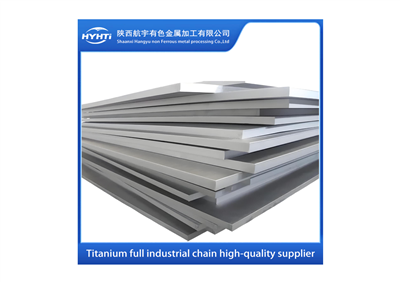
Hey there! As a supplier of pure titanium plates, I've been getting a lot of questions lately about how to control the grain size of these plates during processing. It's a crucial aspect because the grain size can significantly impact the mechanical properties and performance of the final product. So, let's dive right into it and explore some effective ways to manage the grain size.
Understanding the Basics of Grain Size
First off, let's talk about why grain size matters. The grain size of a pure titanium plate affects its strength, ductility, and corrosion resistance. Smaller grains generally lead to higher strength and better formability, while larger grains can result in lower strength but improved ductility. So, depending on the specific application of the titanium plate, you'll want to control the grain size accordingly.
Factors Affecting Grain Size
There are several factors that can influence the grain size during the processing of pure titanium plates. These include:
- Temperature: Temperature plays a huge role in grain growth. Higher temperatures can accelerate grain growth, while lower temperatures can slow it down. During the processing of titanium plates, it's important to carefully control the temperature to achieve the desired grain size.
- Deformation: The amount and type of deformation applied to the titanium plate can also affect the grain size. For example, cold working can refine the grain structure, while hot working can lead to grain growth.
- Time: The duration of the processing steps, such as heating and cooling, can impact the grain size. Longer processing times at high temperatures can result in larger grains.
- Alloying Elements: Although we're talking about pure titanium plates, even small amounts of impurities or alloying elements can influence the grain size. Some elements can act as grain refiners, while others can promote grain growth.
Controlling Grain Size During Processing
Now that we understand the factors that affect grain size, let's look at some practical ways to control it during the processing of pure titanium plates.
1. Heat Treatment
Heat treatment is one of the most effective ways to control the grain size of titanium plates. By carefully controlling the heating and cooling rates, you can achieve the desired grain structure. Here are some common heat treatment methods:
- Annealing: Annealing involves heating the titanium plate to a specific temperature and holding it there for a certain period of time before slowly cooling it. This process can help to relieve internal stresses and refine the grain structure.
- Normalizing: Normalizing is similar to annealing, but the cooling rate is faster. This can result in a finer grain size and improved mechanical properties.
- Quenching and Tempering: Quenching involves rapidly cooling the titanium plate from a high temperature, which can result in a very fine grain structure. However, this can also lead to high internal stresses, so tempering is often required to relieve these stresses and improve the ductility of the plate.
2. Deformation Processing
Deformation processing, such as rolling, forging, and extrusion, can also be used to control the grain size of titanium plates. By applying the right amount and type of deformation, you can refine the grain structure and improve the mechanical properties of the plate. Here are some tips for deformation processing:
- Cold Working: Cold working involves deforming the titanium plate at room temperature. This can result in a significant refinement of the grain structure, but it can also lead to work hardening. To avoid this, intermediate annealing steps may be required.
- Hot Working: Hot working involves deforming the titanium plate at elevated temperatures. This can result in larger grains, but it can also improve the formability of the plate. By carefully controlling the temperature and deformation rate, you can achieve the desired grain size.
3. Alloying and Microstructure Control
Although we're dealing with pure titanium plates, adding small amounts of alloying elements can sometimes be beneficial for controlling the grain size. For example, elements like aluminum and vanadium can act as grain refiners and improve the mechanical properties of the plate. However, it's important to carefully control the amount and type of alloying elements to avoid any negative effects on the performance of the plate.


Case Studies
Let's take a look at some real-world examples of how these methods have been used to control the grain size of pure titanium plates.
- Case Study 1: Aerospace Application
In the aerospace industry, pure titanium plates are often used for structural components. To ensure the highest level of performance, it's important to control the grain size of the plates. By using a combination of heat treatment and deformation processing, a supplier was able to achieve a fine grain structure in their Grade 2 Titanium Sheet [/titanium-plate/pure-titanium-plate/grade-2-titanium-sheet.html], which resulted in improved strength and ductility. - Case Study 2: Medical Application
In the medical industry, pure titanium plates are used for implants. To ensure biocompatibility and mechanical performance, it's crucial to control the grain size of the plates. By carefully controlling the heat treatment process, a supplier was able to produce Grade 1 Titanium Plate [/titanium-plate/pure-titanium-plate/grade-1-titanium-plate.html] with a uniform grain structure, which met the strict requirements of the medical industry. - Case Study 3: Chemical Processing Application
In the chemical processing industry, pure titanium plates are used for corrosion-resistant equipment. To ensure long-term performance, it's important to control the grain size of the plates. By using a combination of alloying and heat treatment, a supplier was able to produce Grade 3 Titanium Plate [/titanium-plate/pure-titanium-plate/grade-3-titanium-plate.html] with a fine grain structure, which provided excellent corrosion resistance.
Conclusion
Controlling the grain size of pure titanium plates during processing is a complex but essential task. By understanding the factors that affect grain size and using the right processing methods, you can achieve the desired grain structure and improve the mechanical properties and performance of the plates. Whether you're in the aerospace, medical, or chemical processing industry, having the right grain size can make a big difference in the quality of your products.
If you're interested in purchasing high-quality pure titanium plates with controlled grain size, feel free to reach out to us. We'd be happy to discuss your specific requirements and provide you with the best solutions.
References
- Smith, J. (2020). Titanium Alloys: Properties, Processing, and Applications. CRC Press.
- Jones, R. (2019). Grain Size Control in Metals and Alloys. Elsevier.
- Brown, A. (2018). Heat Treatment of Titanium Alloys. ASM International.