


Hey there! As a supplier of various part types, I know how crucial it is to train employees effectively on different part types. It's not just about getting the job done; it's about ensuring quality, efficiency, and safety. In this blog, I'm gonna share some tips on how to handle this training process, focusing on the specific part types we deal with.
Understanding the Part Types
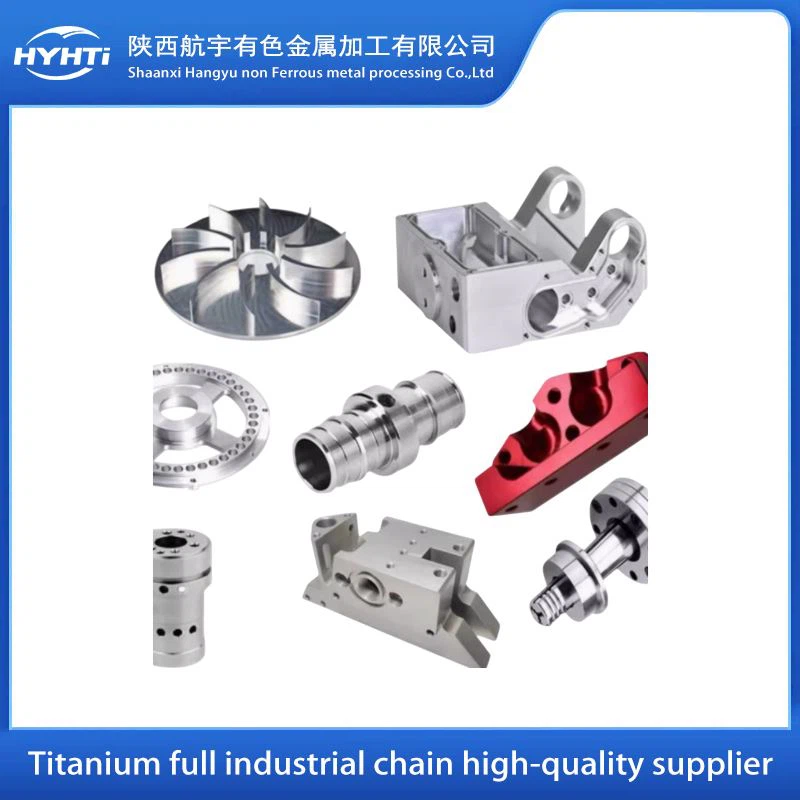
First things first, we need to understand what we're working with. We offer a wide range of part types, including Titanium Solid Of Revolution Parts, Titanium Irregular Parts and Non - standard Parts, and Titanium Connectors and Fasteners. Each has its own unique characteristics, manufacturing processes, and quality requirements.
Titanium Solid Of Revolution Parts
These parts are usually cylindrical or spherical in shape. They are often used in high - precision applications, like aerospace and automotive industries. When training employees on these parts, we need to focus on the machining accuracy. The diameter, length, and surface finish of these parts are critical. For example, we might use high - precision lathes to manufacture them. Employees should be trained on how to set up the lathe, control the cutting speed, and measure the dimensions accurately.
Titanium Irregular Parts and Non - standard Parts
These are the real challenges! Unlike the solid of revolution parts, irregular and non - standard parts don't have a regular shape. They require more complex manufacturing processes, such as multi - axis machining and 3D printing. Training here should involve teaching employees how to read 3D models, plan the machining process step by step, and deal with unexpected problems during production. Employees need to be flexible and creative when working on these parts.
Titanium Connectors and Fasteners
Connectors and fasteners play a vital role in ensuring the reliability of the assembled products. They need to have precise dimensions and high strength. Training for these parts should cover topics like material properties, heat treatment, and quality control. Employees should be able to identify different types of connectors and fasteners, understand their installation requirements, and conduct basic quality inspections.
Training Methods
Classroom Training
This is the traditional way to start the training process. We can invite industry experts or experienced in - house technicians to give lectures. In the classroom, employees can learn the theoretical knowledge about the part types, including their materials, design principles, and manufacturing processes. For example, we can use PowerPoint presentations to show the different shapes and structures of the parts, and explain how they are made. Classroom training also provides an opportunity for employees to ask questions and discuss with their peers.
On - the - Job Training
There's no better way to learn than by doing. On - the - job training allows employees to work directly with the parts and the manufacturing equipment. A more experienced employee can act as a mentor, guiding the newbies through the production process. They can show them how to operate the machines, handle the tools, and deal with real - world problems. For instance, when training on making titanium connectors and fasteners, the mentor can demonstrate how to set up the production line and adjust the parameters for different batch sizes.
Online Training
In today's digital age, online training is becoming more and more popular. We can create online courses that cover all aspects of part - type training. These courses can include videos, interactive quizzes, and downloadable materials. Employees can access these courses at their own pace, which is especially useful for those who need to balance work and learning. For example, an employee can watch a video on how to machine titanium irregular parts during their break time.
Training Evaluation
After training, it's essential to evaluate the employees' learning outcomes. We can use a combination of written tests, practical exams, and on - the - job performance evaluations.
Written Tests
These tests can assess the employees' theoretical knowledge. We can ask questions about the material properties of the parts, the manufacturing processes, and the quality control standards. For example, a written test might ask employees to explain the difference between the machining processes of titanium solid of revolution parts and irregular parts.
Practical Exams
Practical exams are a great way to test employees' hands - on skills. We can set up a mock production line and ask employees to manufacture a specific part. The examiners can evaluate their performance based on factors like the accuracy of the part, the time taken to complete the task, and their ability to follow safety procedures.
On - the - Job Performance Evaluation
This is the most comprehensive way to evaluate an employee's training results. We can observe their performance in the actual production environment over a period of time. We look at factors like the quality of the parts they produce, their efficiency, and their ability to work in a team. If an employee consistently produces high - quality parts and meets the production targets, it indicates that the training has been effective.

Continuous Training and Improvement
The world of part manufacturing is constantly evolving. New materials, technologies, and design concepts are emerging all the time. That's why continuous training is so important.
We should regularly update our training programs to include the latest industry knowledge. For example, if there's a new type of titanium alloy that offers better performance, we should train employees on how to work with it. We can also encourage employees to participate in industry seminars, webinars, and workshops to keep up with the latest trends.
Contact for Procurement
If you're interested in our part types, including Titanium Solid Of Revolution Parts, Titanium Irregular Parts and Non - standard Parts, and Titanium Connectors and Fasteners, don't hesitate to reach out for procurement discussions. We're always ready to provide high - quality parts that meet your specific requirements.
References
- Manufacturing Engineering Handbook, various authors. This book provides in - depth knowledge about different manufacturing processes related to part types.
- Titanium in Engineering Applications, a research publication that focuses on the properties and applications of titanium in different parts.
- Online resources from industry associations on part manufacturing and employee training best practices.


