


In the realm of power generation, the efficiency, reliability, and longevity of power plants hinge significantly on the quality and suitability of the parts used. As a seasoned part type supplier, I've witnessed firsthand the critical role that various components play in different power generation systems. This blog post aims to delve into the commonly used part types in power generation, highlighting their functions, materials, and importance.
1. Turbine Components
Turbines are at the heart of many power generation systems, whether it's steam turbines in coal - fired, nuclear, or concentrated solar power plants, or gas turbines in natural gas - fired power stations.
Blades
Turbine blades are perhaps the most crucial part of a turbine. They convert the kinetic energy of the working fluid (steam or gas) into mechanical energy. These blades are subjected to high temperatures, pressures, and centrifugal forces. Materials like nickel - based superalloys are commonly used due to their excellent high - temperature strength, creep resistance, and corrosion resistance. For example, in a modern gas turbine, the blades in the hot section can operate at temperatures exceeding 1,000°C.
Rotors
The rotor is the rotating shaft of the turbine that holds the blades. It must be able to withstand high rotational speeds and transmit the mechanical power generated by the blades to the generator. Rotors are typically made of high - strength alloy steels. They are precision - machined to ensure smooth rotation and balanced operation. Any imbalance in the rotor can lead to excessive vibrations, which can cause damage to the turbine and other components in the power plant.
2. Generator Components
Generators are responsible for converting the mechanical energy from the turbine into electrical energy.
Stators
The stator is the stationary part of the generator. It consists of a core made of laminated steel sheets to reduce eddy current losses and a set of windings. The windings are made of copper or aluminum conductors. When the rotor, which has a magnetic field, rotates inside the stator, an alternating current is induced in the stator windings according to Faraday's law of electromagnetic induction.
Rotors
Generator rotors can be of two types: salient - pole rotors and cylindrical rotors. Salient - pole rotors are commonly used in low - speed generators, such as those in hydroelectric power plants. Cylindrical rotors are used in high - speed generators, like those in steam - and gas - turbine power plants. The rotor is magnetized either by permanent magnets or by passing a direct current through field windings.
3. Heat Exchangers
Heat exchangers are used in power generation to transfer heat from one fluid to another. They are essential for processes such as pre - heating feedwater, cooling condenser water, and recovering waste heat.
Shell and Tube Heat Exchangers
This is one of the most common types of heat exchangers in power plants. It consists of a shell (a large cylindrical vessel) and a bundle of tubes. One fluid flows through the tubes, while the other fluid flows outside the tubes in the shell. The heat is transferred from the hot fluid to the cold fluid through the tube walls. Materials for the tubes can vary depending on the application, but copper, stainless steel, and titanium are commonly used. Titanium is preferred in applications where corrosion resistance is crucial, such as in seawater - cooled power plants. You can find high - quality Titanium Solid Of Revolution Parts that are suitable for heat exchanger applications.
Plate Heat Exchangers
Plate heat exchangers are made up of a series of thin plates stacked together. The fluids flow through alternate channels between the plates, allowing for efficient heat transfer. They are more compact than shell and tube heat exchangers and are often used in applications where space is limited.
4. Valves and Pumps
Valves and pumps are used to control the flow of fluids (water, steam, gas, etc.) in power plants.
Valves
There are various types of valves used in power generation, including gate valves, globe valves, ball valves, and check valves. Gate valves are used for on - off service, while globe valves are used for flow regulation. Ball valves provide quick on - off operation and are suitable for high - pressure applications. Check valves allow fluid to flow in one direction only, preventing backflow. Valves are typically made of materials such as cast iron, carbon steel, or stainless steel, depending on the pressure, temperature, and corrosiveness of the fluid.
Pumps
Pumps are used to move fluids through the power plant. For example, feedwater pumps are used to supply water to the boiler in a steam power plant. Centrifugal pumps are the most commonly used type in power plants due to their simplicity, reliability, and high - flow capacity. Pump impellers and casings are usually made of materials like cast iron, bronze, or stainless steel.

5. Connectors and Fasteners
Connectors and fasteners are used to join different components together in the power plant.
Titanium Connectors and Fasteners
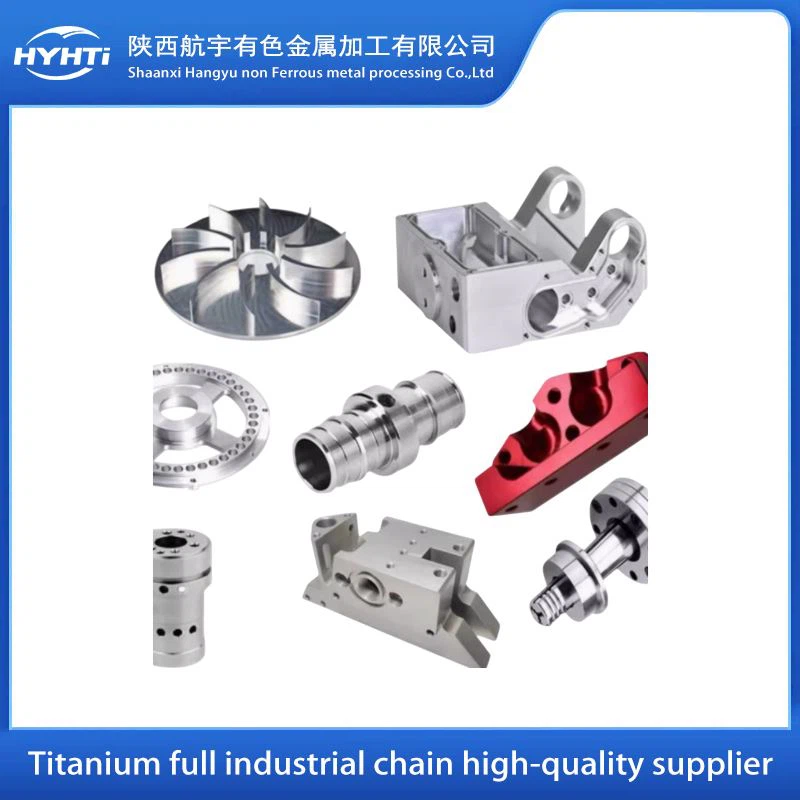
Titanium connectors and fasteners are highly valued in power generation due to their excellent strength - to - weight ratio, corrosion resistance, and high - temperature performance. They are used in applications where lightweight and reliable connections are required, such as in turbine assemblies and generator enclosures. You can explore our range of Titanium Connectors and Fasteners for your power generation needs.
Bolts and Nuts
Bolts and nuts are used to secure components together. They are made of various materials, including carbon steel, alloy steel, and stainless steel. High - strength bolts are used in critical applications where a strong connection is required, such as in turbine casings and generator frames.
6. Irregular and Non - standard Parts
In addition to the standard part types, power generation often requires irregular and non - standard parts.
Titanium Irregular Parts and Non - standard Parts
These parts are custom - designed to meet specific requirements in power plants. They can include complex shapes and geometries that are not available off - the - shelf. Titanium is a popular material for these parts due to its unique properties. Our Titanium Irregular Parts and Non - standard Parts are precision - machined to ensure high quality and performance.
As a part type supplier, I understand the importance of providing high - quality parts that meet the strict requirements of power generation. Whether you are building a new power plant or maintaining an existing one, having the right parts is crucial for the success of your project. If you are in need of any of the part types mentioned above or have specific requirements for custom - made parts, please feel free to reach out for a procurement discussion. I am committed to working with you to find the best solutions for your power generation needs.
References
- Doebelin, E. O. (2003). Measurement Systems: Application and Design. McGraw - Hill.
- Pohl, R. W. (2005). Introduction to Thermodynamics and Heat Transfer. Springer.
- Schweitzer, P. A. (2006). Valve Selection Handbook. Butterworth - Heinemann.


