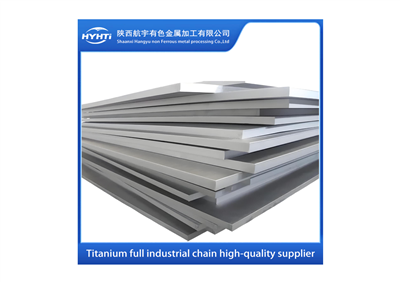
What is the Wear Resistance of Titanium Alloy Plate?
As a dedicated supplier of titanium alloy plates, I am often asked about the wear resistance of these remarkable materials. Wear resistance is a crucial property, especially in applications where the material is subjected to friction, abrasion, or sliding contact. In this blog post, I will delve into the concept of wear resistance in titanium alloy plates, exploring the factors that influence it and the applications where it is particularly important.
Understanding Wear Resistance
Wear resistance refers to a material's ability to withstand the gradual removal of material due to mechanical action, such as friction, abrasion, or erosion. When a titanium alloy plate is in contact with another surface, the relative motion between them can cause the surface of the plate to wear away over time. The wear resistance of a titanium alloy plate is determined by several factors, including its composition, microstructure, hardness, and the nature of the contact environment.
Factors Affecting the Wear Resistance of Titanium Alloy Plates
Composition
The chemical composition of a titanium alloy plays a significant role in its wear resistance. Different alloying elements can enhance the hardness, strength, and corrosion resistance of the alloy, all of which contribute to better wear resistance. For example, the addition of elements like aluminum, vanadium, and molybdenum can improve the mechanical properties of titanium alloys. Gr.9 Titanium Alloy Plate is an alloy that contains aluminum and vanadium, which not only increases its strength but also enhances its wear resistance.
Microstructure
The microstructure of a titanium alloy plate also affects its wear resistance. A fine-grained microstructure generally provides better wear resistance than a coarse-grained one. This is because fine grains offer more grain boundaries, which can impede the movement of dislocations and prevent the material from deforming easily under wear conditions. Heat treatment processes can be used to control the microstructure of titanium alloy plates and optimize their wear resistance.
Hardness
Hardness is a key factor in determining the wear resistance of a material. A harder titanium alloy plate is more resistant to wear because it can better withstand the forces applied during friction and abrasion. The hardness of a titanium alloy can be increased through alloying and heat treatment. For instance, Ti6242 Titanium Alloy Plate has a relatively high hardness, which contributes to its excellent wear resistance in high-stress applications.


Contact Environment
The environment in which the titanium alloy plate operates also affects its wear resistance. In corrosive environments, the surface of the plate may be more prone to wear due to the combined effects of corrosion and mechanical wear. For example, in marine applications, the presence of saltwater can accelerate the wear of titanium alloy plates. However, titanium alloys are known for their excellent corrosion resistance, which can mitigate the effects of the corrosive environment on wear.
Applications of Titanium Alloy Plates with High Wear Resistance
Aerospace Industry
In the aerospace industry, titanium alloy plates are widely used due to their high strength-to-weight ratio and excellent wear resistance. They are used in components such as landing gear, engine parts, and structural elements. The wear resistance of titanium alloy plates ensures that these components can withstand the high stresses and frictional forces encountered during flight. For example, the use of Ti-15-3 (TB5) Titanium Alloy Plate in aerospace applications provides reliable performance under extreme conditions.
Automotive Industry
In the automotive industry, titanium alloy plates are used in high-performance engines and transmission systems. Their wear resistance helps to improve the durability and efficiency of these components. For example, titanium alloy plates can be used in piston rings and valve seats, where they can withstand the high temperatures and pressures generated during engine operation.
Medical Industry
In the medical industry, titanium alloy plates are used in orthopedic implants and dental devices. Their wear resistance is crucial for ensuring the long-term performance of these implants. Titanium alloys are biocompatible, which means they can be safely used in the human body, and their wear resistance helps to prevent the release of wear debris, which could cause inflammation and other complications.
Testing the Wear Resistance of Titanium Alloy Plates
To ensure the quality and performance of titanium alloy plates, various testing methods are used to evaluate their wear resistance. One common method is the pin-on-disk test, where a pin is pressed against a rotating disk made of the titanium alloy plate. The wear rate is then measured by weighing the pin before and after the test. Other methods include the abrasive wear test, where the alloy plate is subjected to abrasive particles, and the sliding wear test, where the plate slides against another surface.
Conclusion
The wear resistance of titanium alloy plates is a critical property that makes them suitable for a wide range of applications. By understanding the factors that influence wear resistance, such as composition, microstructure, hardness, and contact environment, we can select the most appropriate titanium alloy plate for specific applications. As a supplier of titanium alloy plates, I am committed to providing high-quality products with excellent wear resistance. If you are interested in purchasing titanium alloy plates or have any questions about their wear resistance, please feel free to contact us for further discussion and procurement.
References
- "Titanium and Titanium Alloys: Fundamentals and Applications" by Yuri Estrin, M. Aurelia Meyers, and David Branagan.
- "Wear of Materials" by M. W. Rutland and K. L. Johnson.