

Overview of ASTM Grade 6 (Ti-5Al-2.5Sn) Technology
ASTM Grade 6 (UNS R54520) is an alpha titanium alloy with a nominal composition of Ti-5Al-2.5Sn, corresponding to the Chinese TA7 grade. This alloy is solid solution strengthened with aluminum and tin dual elements, without any β - stabilizing elements, and belongs to a typical fully α - type structure without heat treatment strengthening ability. All strength comes from solid solution strengthening and grain control. Its strength level is between industrial pure titanium and alpha+beta type alloys, and it has unique advantages in medium temperature stability, weldability, and ultra-low temperature toughness.
In terms of brand correspondence, Grade 6 is synonymous with AMS 4910/4926, German standard 3.7115, Russian standard BT5-1, and other similar names. It should be noted that TA15 (Ti-6.5Al-2Zr-1Mo-1V) is not a similar grade to Grade 6- TA15 contains beta stable elements such as Mo, V, Zr, etc., and belongs to the near alpha type alloy. The strength level and beta phase transition point are significantly different from Grade 6, and should not be confused when selecting materials.
Complete mechanical performance indicators
The mechanical performance data of Grade 6 annealed state varies depending on the product morphology and standards. According to the GB/T 3621 plate standard, TA7 plates with a thickness of ≤ 10 mm have a yield strength Rp0.2 ≥ 685 MPa, a tensile strength Rm of 735~930 MPa, and an elongation rate A ≥ 12%. The lower limit of tensile strength for American Grade 6 sheet is increased to 828 MPa. In terms of typical room temperature performance:
·Tensile strength (Rm): typical value about 800~860 MPa
·Yield strength (Rp0.2): Typical value is about 700~780 MPa
·Post fracture elongation (A): ≥ 15% (gauge length 50 mm, typical value about 17-20%)
·Sectional shrinkage rate (Z): ≥ 20%, typical value 25-30%
·Hardness: Approximately 260~310 HBW (corresponding to HRC of approximately 30~36)
·Density: 4.42 g/cm ³
·Elastic modulus: approximately 110-113 GPa
High temperature mechanical properties
Grade 6 exhibits superior microstructure stability and creep resistance compared to α+β - type alloys within the temperature range of 425~500 ℃. This is due to the fact that its full alpha structure does not undergo phase transition within the service temperature range,
avoiding performance degradation caused by beta phase decomposition or aging precipitation.
·300 ℃ tensile strength: ≥ 620 MPa
·300 ℃ yield strength: ≥ 550 MPa
·400 ℃ tensile strength: ≥ 540 MPa
·400 ℃ yield strength: ≥ 470 MPa
·500 ℃ tensile strength: ≥ 450 MPa
·500 ℃ yield strength: ≥ 380 MPa
·500 ℃ creep (100h, 200MPa): total strain<0.5%
Physical properties and organizational characteristics
The β phase transition point of Grade 6 is about 1020~1030 ℃, significantly higher than that of α+β alloys such as TC4, which is a direct reflection of its full α - type microstructure. The thermal conductivity is about 7.7-11 W/(m · K), and the coefficient of linear expansion is about 9.1 × 10 ⁻⁶/℃ (average at 20-500 ℃). The annealed microstructure consists of single equiaxed alpha grains, typically ranging in size from 15 to 50 μ m, with no residual beta and no intermetallic compounds. Hot processing must be controlled in the upper part of the α zone or α+β zone for a short period of time. Once the β phase transition point is crossed and the insulation is maintained, a Weibull α needle like structure will be generated, and the plasticity and toughness will sharply decrease.
Corrosion resistance and stress corrosion sensitivity
Grade 6 has excellent corrosion resistance in most media, with a low corrosion rate in seawater, approaching the level of industrial pure titanium. However, the alloy exhibits significant sensitivity to stress corrosion cracking (SCC) in chloride containing environments, which must be highly valued in engineering material selection. Research has confirmed that Ti-5Al-2.5Sn can undergo SCC in a 3% NaCl solution without the need for pre fabricated notches or fatigue cracks. The chemically polished flat specimens exhibit transgranular cracks within six weeks in an acidic chloride environment at room temperature. In the high-temperature sea salt stress corrosion evaluation, Grade 6 has the worst SCC resistance among the tested titanium alloys. Welding and stress relief annealing actually increase its SCC sensitivity.
This characteristic means that when selecting Grade 6 in seawater or chemical chlorine containing media, it cannot be judged solely based on the low uniform corrosion rate. It is necessary to comprehensively evaluate the combined risk of stress level, medium pH, temperature, and surface state. The surface treatment state has a significant impact on the behavior of SCC - samples without chemical polishing still show no signs of cracking in the same environment for three months, while samples with chemical polishing crack after six 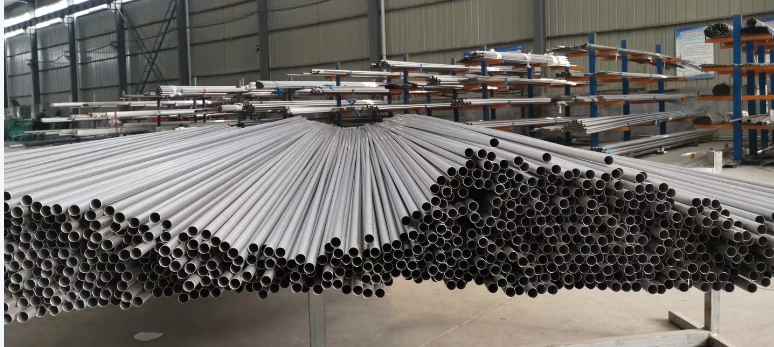
Preparation process of Grade 6 extruded tube
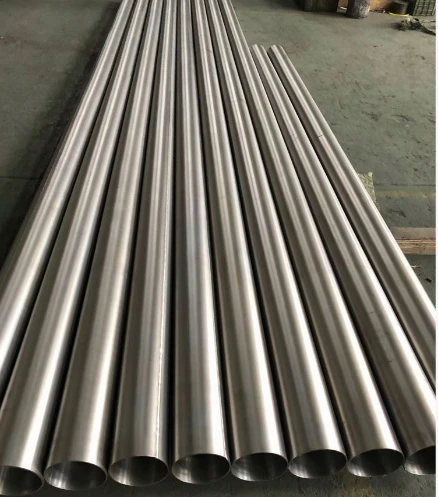
The process research of Grade 6 extrusion tube is relatively sufficient. The extrusion ratio is a key parameter affecting the strength and plasticity of pipes. As the extrusion ratio increases, both the strength and plasticity of pipes improve; The corresponding relationship between the room temperature properties and microstructure of pipes extruded in the two-phase zone is good; The annealing temperature and time have little effect on the microstructure and mechanical properties, which is consistent with the basic characteristic of no phase transition in its full alpha microstructure.
The optimal process window is: extrusion temperature of 950 ℃, extrusion ratio of 10.2, annealing system of 800~850 ℃, holding for 1-2 hours, and air cooling. At this time, the pipe can achieve the best matching of microstructure and properties. However, it should be noted that Grade 6 lacks β - stabilizing elements, resulting in poor hot working plasticity and strong crack sensitivity. If the extrusion ratio is too large, it may introduce surface defects. Whether the value of 10.2 is "optimal" needs to be judged based on the specific billet particle size and lubrication conditions. In addition, the α+β two-phase zone of Grade 6 is extremely narrow. If the extrusion temperature actually falls in the β zone, the microstructure will become Weibull α and the plasticity and toughness will significantly deteriorate.
Application positioning of Grade 6 extrusion tube
Grade 6 extruded pipes are mainly suitable for components with certain strength requirements below 425 ℃. Typical applications include aircraft engine compartment pipelines, firewall penetrations, and chemical high-temperature equipment. Its core engineering value can be summarized as a combination of "pure titanium grade corrosion resistance+500 ℃ grade heat resistance+excellent weldability+ultra-low temperature toughness", but its corrosion resistance is slightly inferior to industrial pure titanium, and there is a risk of SCC in chlorine containing stress environments. When selecting, a balance judgment needs to be made between strength and corrosion resistance.


