Product Introduction
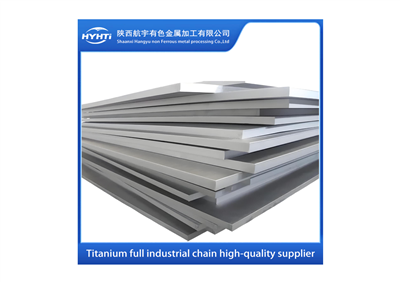
Gr.1 titanium alloy, as first-grade commercially pure titanium, has good corrosion resistance, biocompatibility, low density, and excellent ductility. It is widely used in aerospace, medical devices, and structural engineering. However, its surface hardness is relatively low and prone to wear. Traditional strengthening methods usually require the introduction of other elements for alloying or the formation of high-temperature β-phase, making it difficult to obtain high-performance titanium alloys in the pure α-phase.
Titanium Alloy Sheet Forming Issues
(1) Titanium alloy sheets have relatively high strength and a large thickness-direction anisotropy index, so high-tonnage forming machines are required;
(2) The yield and tensile strengths of titanium alloy sheets are very close at room temperature, leaving a small plastic deformation range, which can lead to failure if deformation is slightly excessive during deep drawing;
(3) Titanium alloy sheets have a low elastic modulus, generally about half that of steel, resulting in significant springback after forming;
(4) The uniform elongation of titanium alloy sheets is low, so the strain before instability during stretching is small, and the reduction in area is also low, making cracks and deep drawing difficult;
(5) Titanium alloy sheets are prone to wrinkling or even cracking under stress, which is a major challenge in forming;
(6) Titanium alloy has high hardness, roughly twice that of steel, requiring greater demands on the mold materials used for forming;
(7) Titanium alloy sheets are sensitive to notches and defects, which also complicates the deep drawing process.
Material Parameters
The material parameters of Gr.1 titanium alloy thin sheets are shown in Table 1. The elastic modulus, yield strength, tensile strength, elongation, and plastic strain ratio are all average values.
Table 1 Gr.1 titanium alloy sheet material model parameters
| Material Density |
4.51g/cm³ |
| Poisson's Ratio |
0.34 |
| Elastic Modulus |
92333MPa |
| Yield Strength |
266MPa |
| Tensile Strength |
287MPa |
| Elongation |
39% |
| Plastic Strain Ratio |
2.96 |
Table 2 Trace Elements and Content in Gr.1
|
Mass fraction(%) |
Fe |
C |
N |
H |
O |
Others |
|
Gr.1 |
≤0.25 |
≤0.1 |
≤0.03 |
≤0.015 |
≤0.2 |
≤0.1 |
Application
Currently, the main processing method for titanium products on the market is still deep drawing. It relies on presses and molds to apply pressure to the titanium alloy sheets to be formed, causing plastic deformation of the titanium alloy sheets to obtain deep-drawn components. These are widely used in industrial production. As shown in Figure 1, it illustrates the application of deep-drawn titanium alloy products. Compared with other processing methods, parts produced by deep drawing have stable quality. Deep drawing can process thin-walled parts, has high material utilization for stamping, high efficiency, and additionally, the molds have a long service life, which reduces production costs for enterprises.

Hot Tags: low-strength gr.1 thin sheet, China low-strength gr.1 thin sheet manufacturers, suppliers, factory